
ROME, ITALY
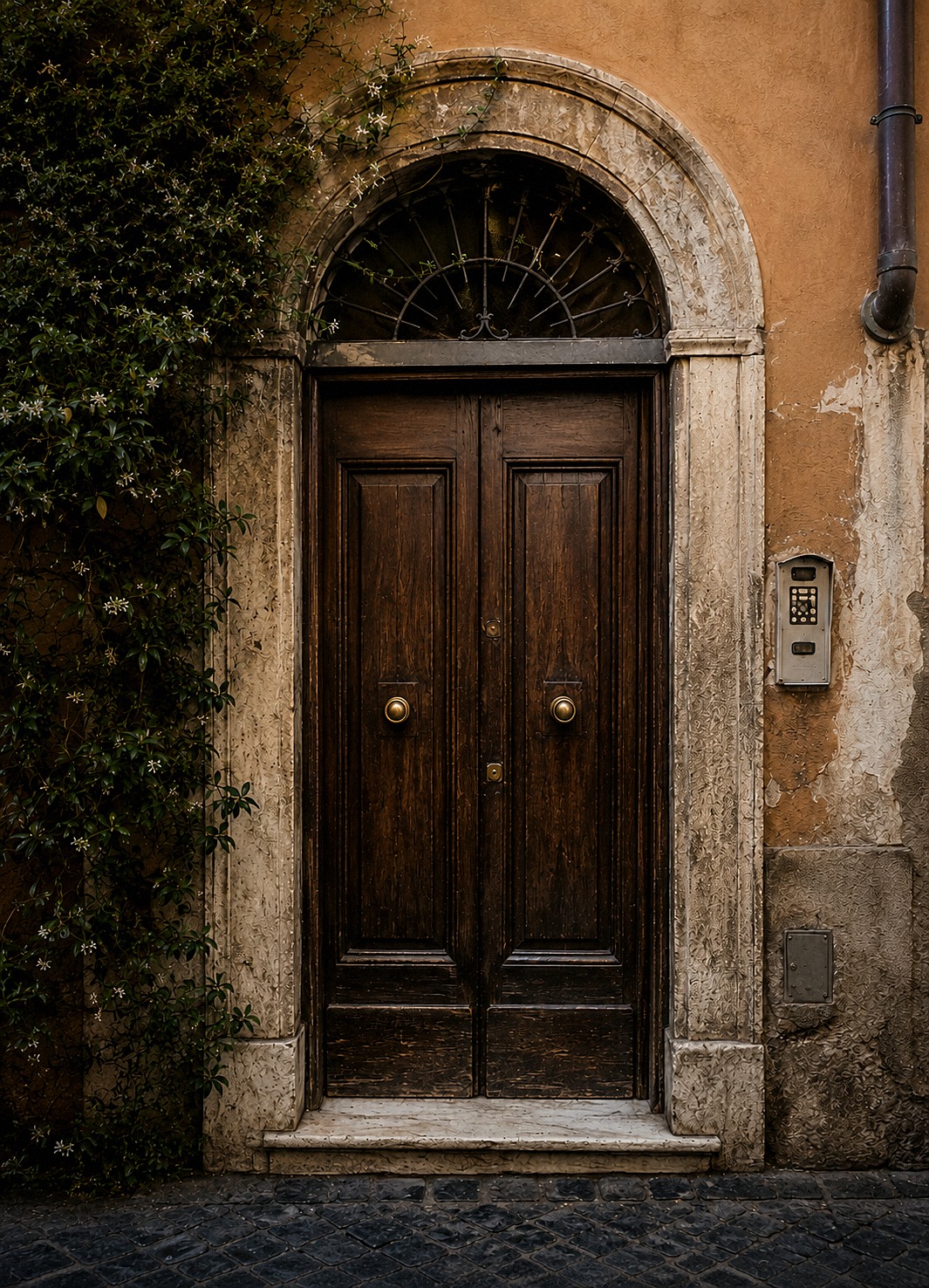
An ordinary wooden door in Trastevere, and nearly 1,750 years of Rome behind it.
- Status
- Open
- Location
- 22 Vicolo Moroni, Trastevere, Rome, Italy
- Period currently documented
- AD 271 – today
- Research
- Ongoing
We chose this door without knowing what was behind it.
No famous address. No monument sign. No plaque telling us to stop and look.
Just a heavy wooden door marked 22, on a narrow street in Trastevere.
So we started digging.
What we found took us back nearly 1,750 years.
Behind this door, we found ancient Rome.
The Aurelian Walls
Behind No. 22 is a property that extends through the block toward the Tiber. Within it survives part of one of the greatest defensive projects of ancient Rome:
The Aurelian Walls.
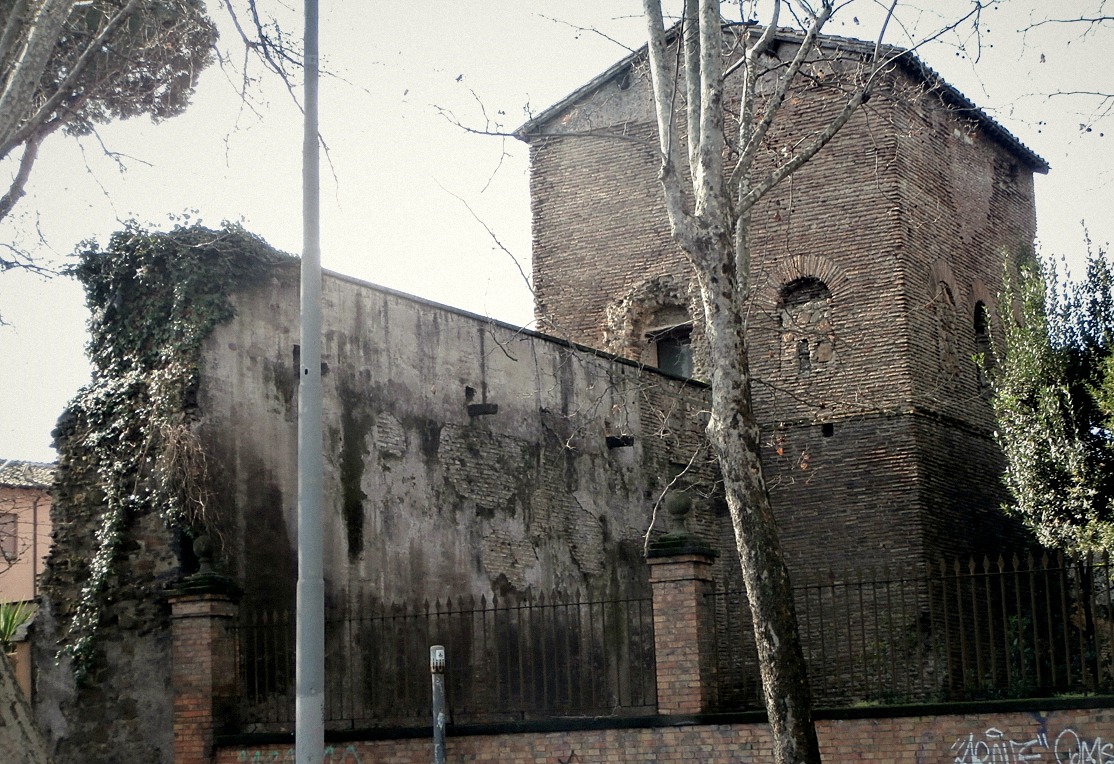
AD 271
Rome — AD 271
By the third century, Rome was changing.
For generations, the capital of the Roman Empire had been protected largely by distance and by the strength of the empire surrounding it. Rome hadn't required a massive new defensive enclosure around the city.
That confidence was disappearing.
The empire was facing invasions, internal rebellions, political instability and increasing threats along its frontiers.
Rome itself could no longer be considered untouchable.
Emperor Lucius Domitius Aurelianus — Aurelian — responded with an enormous construction project.
Beginning around AD 271, a new defensive wall was built around Rome.
When completed, the circuit stretched approximately 19 kilometres, incorporating existing buildings and natural features wherever possible to accelerate construction.
Walls. Gates. Towers.
An enormous defensive barrier surrounding the imperial capital.
And part of that system crossed the neighborhood we now call Trastevere.
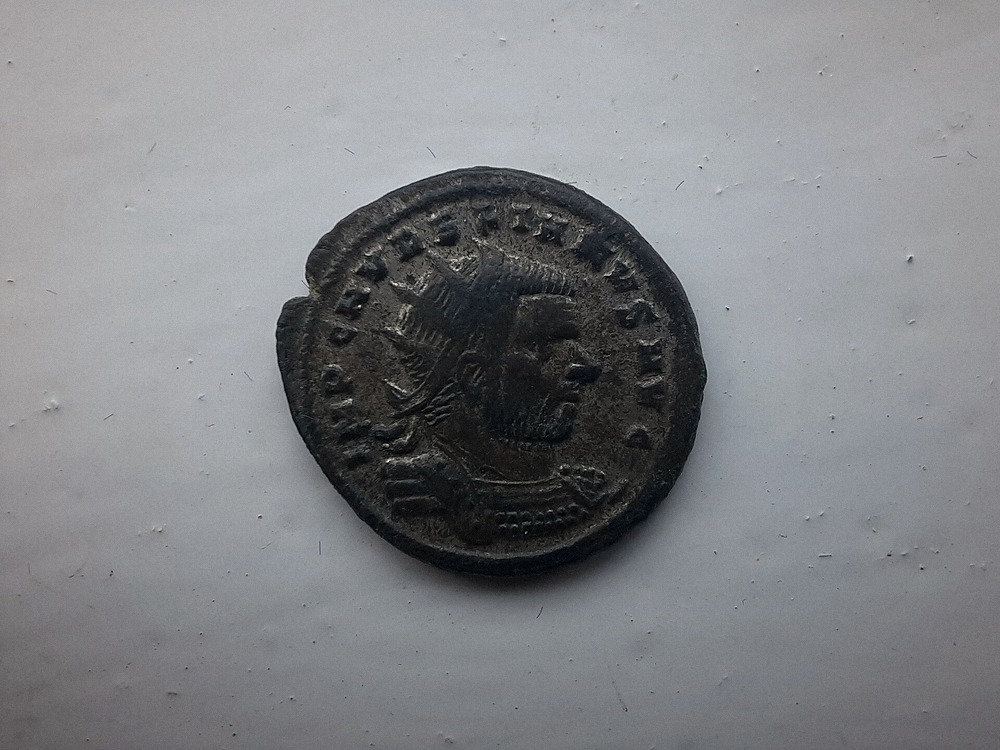
One of those towers survives here.
The property entered from 22 Vicolo Moroni extends through the block to Lungotevere della Farnesina 7.
Within that property survives part of the ancient defensive line, including a Roman tower documented by Rome's archaeological authorities.
The tower has been altered over the centuries, but the ancient structure survived.
Which means the unassuming doorway at No. 22 leads into a property containing architecture whose story begins in the Roman Empire.
But that was only the beginning of what we found.
1748
Rome — 1748
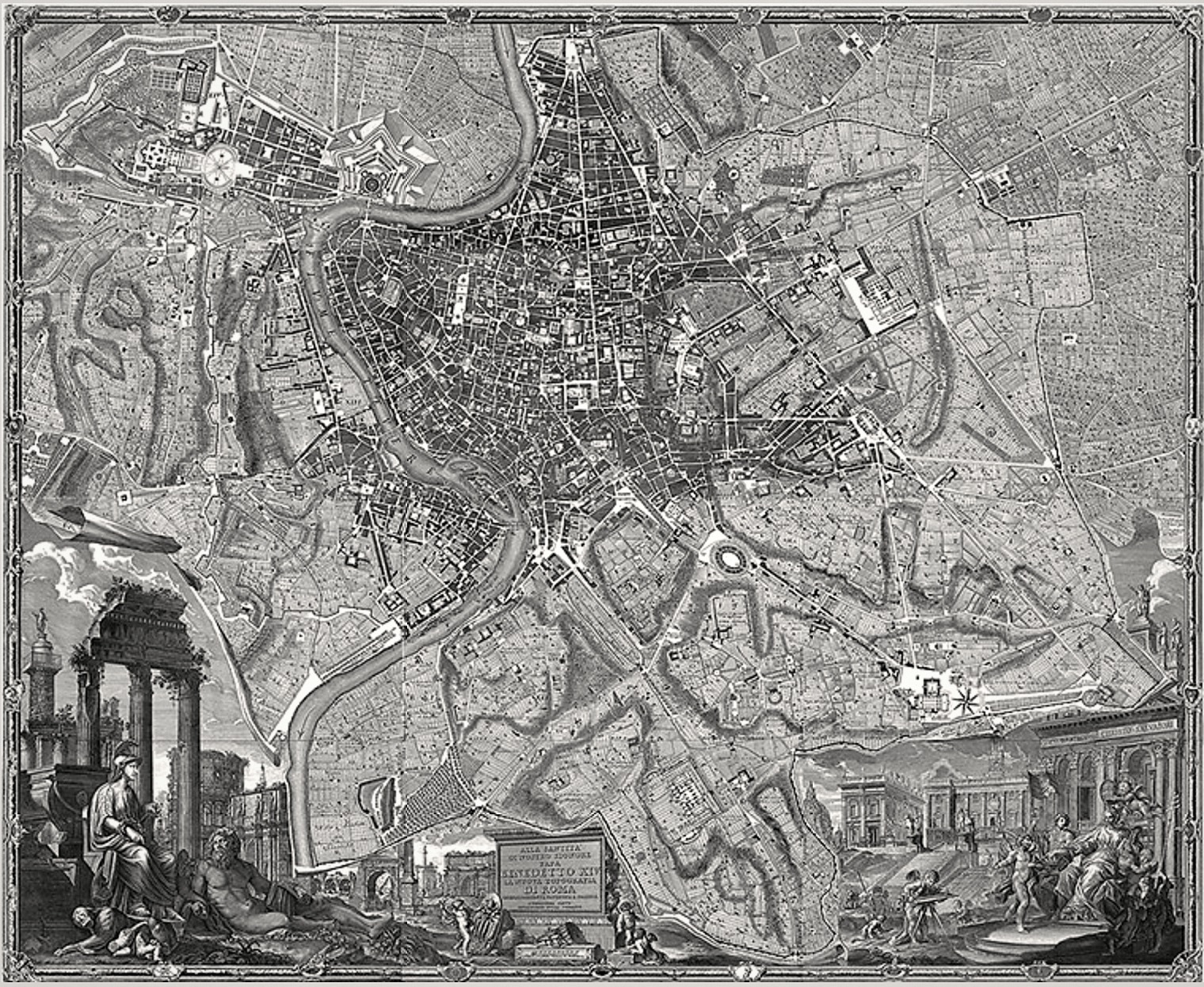
Almost fifteen centuries after Aurelian ordered the walls built, architect and surveyor Giambattista Nolli produced one of the most extraordinary maps of Rome ever created.
His Nuova Pianta di Roma documented the city in remarkable detail.
Vicolo Moroni is there. Porta Settimiana is there. And so are the ancient fortifications.
A reconstruction of this section using Nolli's map shows five defensive towers still standing east of Porta Settimiana in 1748.
Rome had grown around them. Generations had come and gone. Empires had disappeared.
But the walls remained.
Then Rome changed again.
In the later nineteenth century, work began transforming the banks of the Tiber. Construction of the new Lungotevere embankments required portions of the ancient defensive line to be removed.
Walls that had survived for roughly sixteen centuries disappeared. Towers disappeared with them.
Of the five towers documented along this section in the eighteenth century, only part of that defensive landscape survives today.
One of those surviving structures is associated with the property behind No. 22.
But the part we loved most wasn't about an emperor.
At some point during the nineteenth century, one of the surviving ancient towers in this area had acquired a very different purpose.
It had become someone's home.
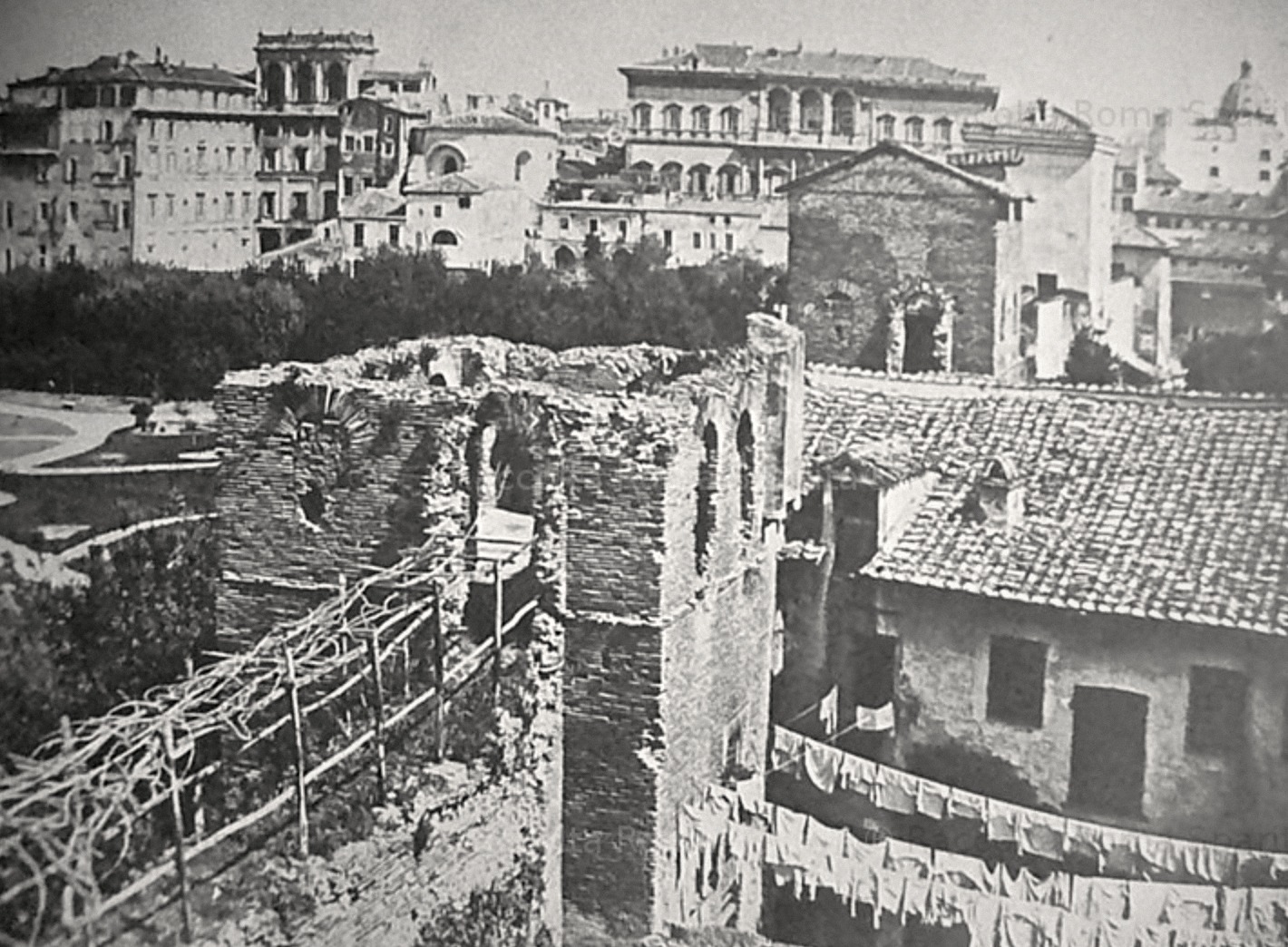
Historical documentation from Villa Farnesina records that one of these towers was inhabited by a Roman public laundress.
Think about that for a moment.
A structure originally built as part of the defenses of the Roman Empire was now a place where an ordinary woman lived and worked.
No emperor. No army. No invading force.
Laundry.
Everyday life had moved into the ruins of an empire.
We haven't found her name. Maybe we never will.
But we know she was there.
And somehow, that small detail makes seventeen centuries of history feel much closer.
A Roman tower became someone's home.
Today
Walk down Vicolo Moroni now and it would be very easy to pass No. 22 without giving it another thought.
There is nothing outside explaining what survives within the property. Nothing telling you about Aurelian. Nothing telling you about the towers. Nothing telling you that portions of this defensive line survived while others were demolished as modern Rome grew around them.
And nothing telling you about the unnamed woman who once made part of an ancient Roman fortification her home.
We didn't know any of that either.
We just chose a door. Then we looked behind it. And found nearly 1,750 years of Rome.
What we know
- •The property entered at Vicolo Moroni 22 extends through the block to Lungotevere della Farnesina 7.
- •Remains of Rome's Aurelian defensive system, including a documented Roman tower, survive within that property.
- •Construction of the Aurelian Walls began around AD 271 under Emperor Lucius Domitius Aurelianus; the completed circuit ran approximately 19 kilometres.
- •Giambattista Nolli's Nuova Pianta di Roma (1748) documents Vicolo de' Moroni, Porta Settimiana and the fortifications in this part of Trastevere.
- •An early twentieth-century photograph of Vicolo Moroni records laundry hanging across the street with the Aurelian Walls still visible behind it.
- •Villa Farnesina historical gardens documentation records that a Roman public laundress lived in one of the surviving towers in this area during the nineteenth century.
What we think
- •The surviving tower associated with this property is most likely one of the structures shown along this section of the walls in the eighteenth- and nineteenth-century records, but we have not established a one-to-one match with a specific tower on the Nolli map.
What we don't know
We do not know the name of the laundress who lived in one of these towers, or which surviving tower she occupied.
Sovraintendenza Capitolina / Museo Virtuale delle Mura di Roma
- Aurelian Walls in Trastevere and surviving towers, including the tower at Lungotevere della Farnesina 7
- https://museovirtualedellemura.romasitounesco.it/itinerario-7-le-mura-aureliane-di-trastevere/
- https://museovirtualedellemura.romasitounesco.it/pin/page/8/
Roma Capitale / Sovraintendenza Capitolina
- Historical background on the Aurelian Walls and their construction under Emperor Aurelian
- https://www.sovraintendenzaroma.it/content/intorno-alle-mura
Villa Farnesina
- Historical gardens documentation, Aurelian Wall remains and the nineteenth-century public laundress associated with one of the surviving towers
- https://www.villafarnesina.it/giardini-storici/
Giambattista Nolli — Nuova Pianta di Roma, 1748
- Historical map documenting Vicolo de' Moroni, Porta Settimiana and the surrounding area
- https://www.info.roma.it/pianta_di_roma_1748_giovan_battista_nolli.asp
Roma Sparita / Vicolo Moroni, early 1900s
- Historical photograph of Vicolo Moroni, early 1900s. Photographer unknown; original source unknown.
- https://www.romasparita.eu/foto-roma-sparita/57377/trastevere-15
Casa San Giuseppe
- Current property information establishing the pedestrian entrance at Vicolo Moroni 22 and vehicle entrance at Lungotevere della Farnesina 7
- https://www.casasangiuseppe.it/contatti
Figlie di San Giuseppe di Rivalba
- Casa San Giuseppe property information and documentation concerning the Aurelian Walls crossing the garden
- https://www.figliedisangiuseppedirivalba.org/fsg/en/2016/10/28/4195/
Aurelian coin image
- MumblerJamie / Wikimedia Commons, CC BY-SA 2.0
AI-assisted tools were used to help search, organize and interpret archival material. The historical documents shown are authentic archival scans. Historical findings are based on publicly available archival records and sources we review.
FILE 004: OPEN.
We walked past an ordinary door. History was hiding behind it. Research into the surviving tower and the unnamed laundress continues.
File 004
22 Vicolo Moroni
Trastevere, Rome, Italy
No Fiction. No Hype. Just What We Find.
The Doorway Files